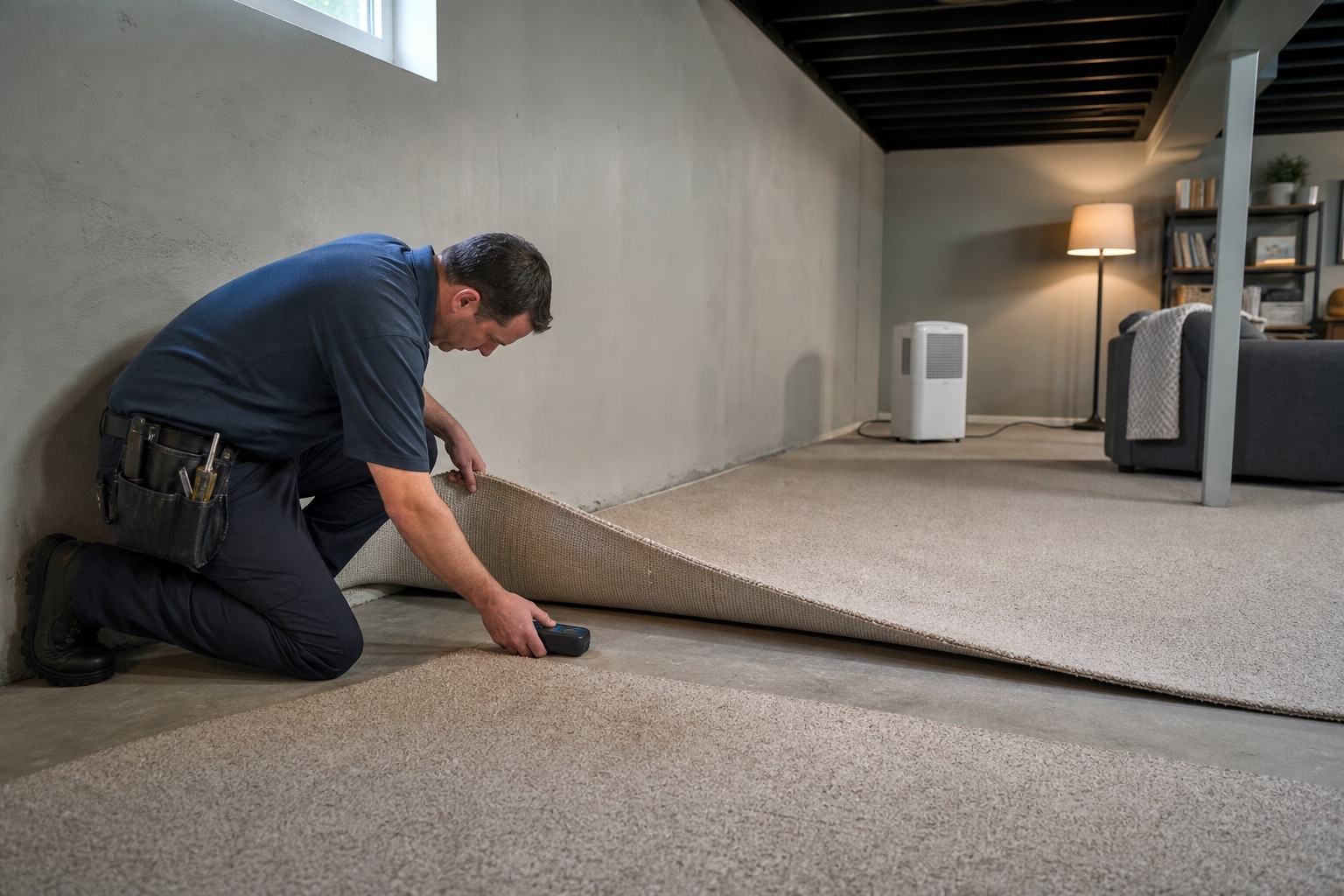
What to do after water reaches the property
Protect people first
Keep clear of electrical hazards, unstable ceilings, contaminated water, and any area that appears unsafe.
Stop the source when practical
Shut off a fixture or supply only when it can be reached and operated safely.
Document the starting condition
Photograph affected rooms and make a short list of wet materials before conditions change.
Remove accessible water
The appropriate method depends on the amount, source, access, and materials involved.
Check beyond the visible edge
Flooring layers, trim, cabinets, walls, insulation, and rooms below may hold moisture.
Plan drying, cleanup, and repairs
These steps are connected, but each involves a different decision about the property.
A Omaha plan should fit the property
Omaha homes can face hard freezes, strong storms, basement seepage, and water moving through layered flooring or finished lower levels. A useful plan starts with the source, timing, rooms, and materials at the actual property.
A useful call should identify the likely source, timing, connected rooms, material layers, and any area below or beside the visible damage. Ask how the scope distinguishes removable water from moisture retained in flooring, wall bases, cabinets, insulation, or other assemblies.
Before you commit to a next step
- Ask which areas and materials are included in the moisture assessment.
- Ask how progress and the drying endpoint will be evaluated.
- Separate drying and cleanup decisions from repair or reconstruction work.
- Make sure the explanation is specific to the property, not just the equipment.